
IVF Superstitions Uncovered: From McDonald’s French Fries to Pineapples and More
You’ve been there, late night scrolling through Instagram or TikTok and filing away any and all tricks that hold the key to a successful embryo transfer. We decided to take a closer look at some of these IVF superstitions and better understand their origins.
McDonald’s French Fries
One popular superstition among IVF patients is consuming McDonald’s French Fries on the way home from the embryo transfer. The origin of this myth is unclear, but it is believed that the high salt content in the fries may help the body to absorb any excess fluids, potentially fending off ovarian hyperstimulation syndrome (OHSS). However, it should be noted that there is no scientific evidence to support this belief.
Pineapple
Eating one ring of pineapple, including the core, daily for five days starting on the day of the embryo transfer is another common IVF superstition. Because pineapple contains bromelain, a mix of enzymes that may break down scar tissue and decrease inflammation, patients were eating pineapple on an empty stomach the day of their embryo transfer. But again, there is no scientific research that supports this will improve implantation.
Pomegranate Juice
Drinking pomegranate juice before and after the embryo transfer is another IVF superstition. Pomegranate juice is known to contain antioxidants and vitamins, and it is thought to thicken the uterine lining, which could aid with implantation. Additionally, the antioxidants may improve egg quality prior to the transfer. Despite these potential benefits, there’s no scientific evidence to back up this practice.
Water
Drinking more than 64 ounces of water in the days after the embryo transfer is another common recommendation. It is believed that staying well-hydrated can support blood flow to the uterus, which in turn can aid in implantation.
Warm Feet/Cozy Socks
Many people believe that keeping your feet warm during the transfer is beneficial. The reasoning is that if your body is sending blood flow to your extremities to keep your feet warm, it may redirect blood flow away from the uterus and embryo. However, like all the other superstitions, the scientific support for this is lacking.
Dr. Charles Miller Weighs in on IVF Superstitions
Dr. Miller, a renowned fertility expert, acknowledges the existence of these superstitions. He notes, “While all of these IVF myths have some sort of scientific support, at the end of the day, none of them have been studied and certainly, none have been shown to be effective.”
He adds humorously, “Nonetheless, I’m waiting for the day that one of our patients walks into the office eating the McDonald‘s Infertility Happy Meal consisting of fries, pineapple core and pomegranate juice. I guess it’s healthier than chicken nuggets and a Coke!”
In conclusion, while these IVF superstitions may seem to have a scientific basis, there is no evidence to suggest that any of them actually influence the outcomes of IVF treatment and they should not replace the medical advice from your fertility care team. Remember, success in IVF is primarily determined by medical factors and a tailored treatment plan.

Do's and Don'ts During the Two-Week Wait After Embryo Transfer
Transfer Day is an exciting and hopeful point on your fertility journey, but the two-week wait that follows can be a challenging period filled with stress, anxiety and impatience. To help you make the most of this crucial time, we consulted with Monika and Mel from our amazing IVF team. They shared some important do's and don'ts to help you through the two-week wait post embryo transfer.
❌Don't Google - Trust Your Medical Team for Guidance
We know it’s tempting, but one of the most common instincts during the two-week wait is to turn to Google for answers and reassurance. However, this can lead to unnecessary stress and confusion. Remember your fertility journey is unique to you and best understood by your medical team. Rely on their expertise and guidance to ease your concerns and not Dr. Google.
✅Follow Medication Instructions
Unless instructed otherwise by your doctor, make sure to continue your medication regimen. Medications like progesterone help support embryo implantation. Consistency in following your doctor's orders is key to your success.
❌Don't Take a Pregnancy Test
It's natural to be anxious and eager to confirm a positive outcome, but taking a home pregnancy test too early can be inaccurate and potentially lead to disappointment. These tests may show a negative result because it's too soon to detect the necessary hormone levels. Or, in some cases, they might show a positive result, but the pregnancy may not continue to develop as expected. Instead, wait for the blood test, which provides more accurate and reliable results.
✅ Rest on Transfer Day, but Stay Active
While it's important to take it easy on the day of the embryo transfer, this doesn't mean you need to spend the entire two weeks in bed. Light activities such as walking can actually help boost blood flow, potentially benefiting the implantation process.
❌ Don’t Have Sexual Intercourse
To support the best conditions for the embryos to implant, refrain from sexual intercourse and orgasm during the two-week wait. This helps prevent uterine contractions that may interfere with the process.
✅ Do Delay Having a Bowel Movement
After the embryo transfer, it's wise to avoid any activities that might strain the pelvic area, including pushing during a bowel movement. Wait for about 5 hours before trying to have a bowel movement.
❌ Don't Drink Alcohol
During this critical period, it's best to maintain a healthy lifestyle, including your diet. Avoiding alcohol and focusing on a well-balanced diet is essential.
✅ Try to Relax and Manage Stress and Anxiety
Stress and anxiety are natural during the two-week wait, but managing these emotions is crucial. Consider relaxation techniques such as acupuncture, yoga, journaling or simply pampering yourself. A calm mind supports your fertility journey.
Always remember to follow the specific instructions provided by your dedicated care team. They are here to support and guide you through this journey. You're not alone, and we're here for you every step of the way.
For any concerns or questions, don't hesitate to reach out to our team. We're here to provide the care and assistance you need.
Avoiding a Second Surgery: How a Change in Medication Could Lead to Pregnancy
Our last blog post detailed a successful isthmocele repair surgery that will hopefully lead to a healthy pregnancy. Today’s post is a little different.
Here is a case where surgery, performed by another surgeon, had failed. The patient, Lindsey*, was still symptomatic with fluid in the cavity. Dr. Miller provided the patient with a new medical protocol, avoiding a second surgery.
Read Lindsey’s story to find out the result.
After almost four years of struggling with secondary infertility, I was fortunate enough to discover Dr. Charles Miller and the Advanced IVF Institute. I had been diagnosed with an isthmocele, which was a defect in my cesarean scar that was leading to fluid accumulation in my endometrial cavity. Just reaching the diagnosis of an isthmocele and the potential impact it could have on my fertility had taken many years. I was exhausted, frustrated, and unsure if I would ever have another child. My local physicians seemed to be at an impasse. Despite having my isthmocele surgically repaired, I was continuing to develop fluid which was impairing the ability of my physicians to transfer any embryos.
After contacting Dr. Miller, I knew it was the right decision. He was very resolute in the forward management of my situation. He did not recommend a repeat surgery to repair the defect that had not been successfully repaired. This was initially surprising to me! Repeat surgery seemed to be the obvious decision, but his thoughts were that possibly changing the protocol for my Frozen Embryo Transfer (FET) would decrease the amount of fluid I was producing.
When transferring frozen embryos, the usual protocol is to use estrogen and the route can vary (i.e. oral, patch, intramuscular). The patient then adds progesterone prior to the transfer. Unfortunately, in my case, the estrogen caused a build-up of fluid, particularly with the isthmocele.
Due to his extensive experience in this matter, I trusted Dr. Miller’s judgment and I am so thankful that I did. After two previously canceled FET cycles with other protocols, I followed the protocol set forth by Dr. Miller on my third attempt.
The protocol that he recommended, and he said was successful on many occasions, is that rather than utilizing estrogen initially, the meds are used to stimulate the ovaries so that my own estrogen levels rise. Thus, taking away the need to utilize estrogen.
I am ecstatic to say that it worked and I am eternally grateful to Dr. Miller and his staff. We are set to welcome our miracle in May 2018!!
-Lindsey
*Name changed to protect patient privacy


Her Own View: A Patient’s Journey Through IVF- Transfer Day!
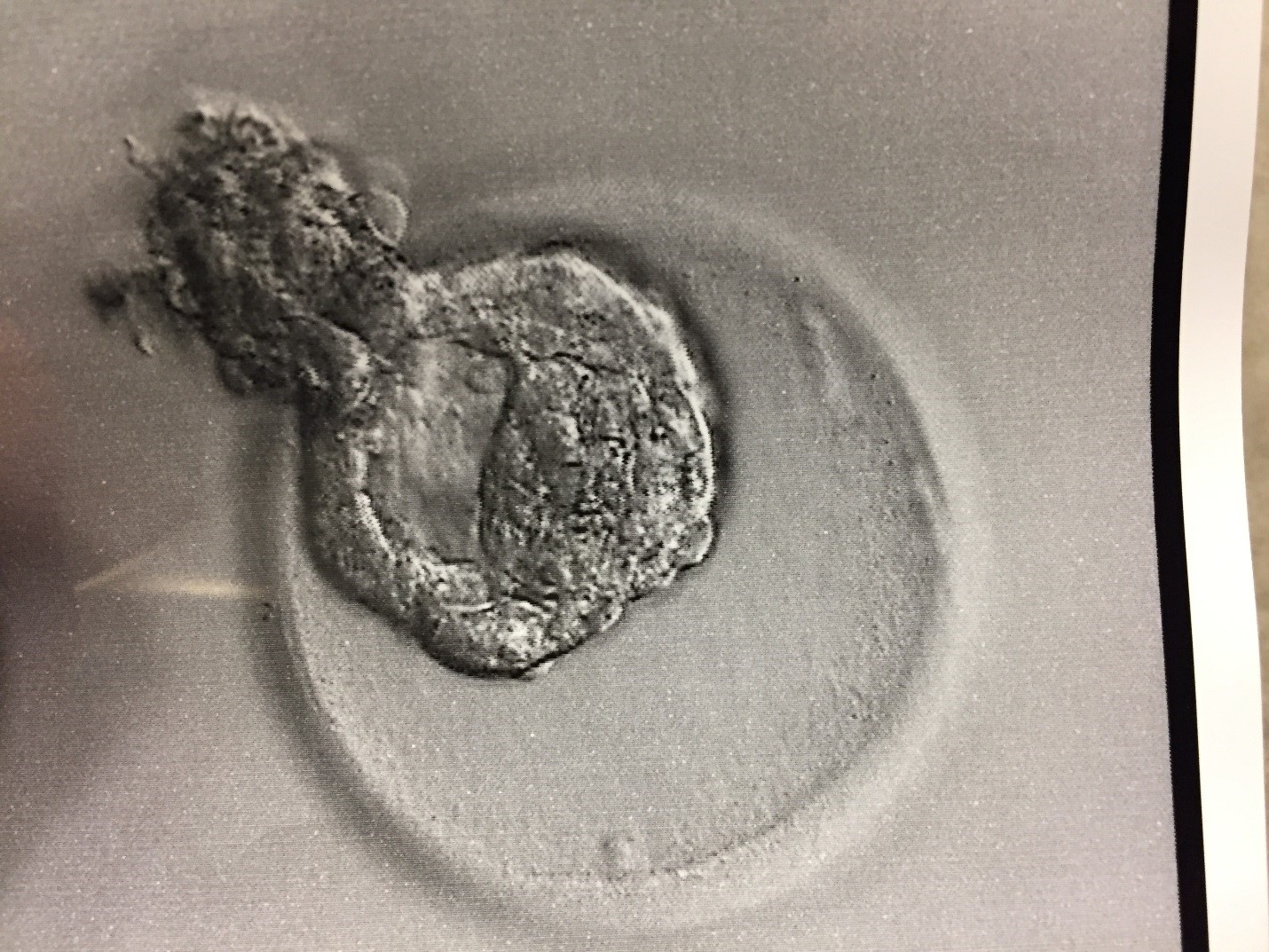
We made it!! Transfer day is finally here! I’ve spent the last few weeks prepping for the Frozen Embryo Transfer (FET). As you might have seen from the last post, preparation includes taking Progesterone in Oil (PIO) shots, Estradiol in varying dosages and other such medications. The preparation for the FET was nothing compared to the preparation for retrieval. The varying dosages can get a little tricky, but the nurses give detailed instructions so we were well-prepped for the routine. I also had to go in for bloodwork and an ultrasound to make sure my levels are good, and that the uterine lining is thick enough for the FET. Luckily, everything went according to plan, and we transferred a beautiful, hatching blastocyst this morning!
Going into the procedure, I had a lot of nervous energy, not only the day of, but the day before. I had waited SO long for this day that I was almost in disbelief that it was finally here!
This morning, I had to be at the Naperville office at 6:15AM for a 6:45AM procedure. Dan and I were taken in around 6:30AM and were both asked to put on scrubs. Dan was allowed to put his scrubs on over his clothes; however, I was asked to take off my bottoms (for obvious reasons!). The embryologist then came into the room and informed us they successfully thawed one embryo and noted that assisted hatching was not necessary since it was already hatching out of its shell! She also verified we were only transferring one. We chose to transfer only one embryo, because the possibility of having twins scares me! Also, my insurance covers IVF so I can do one transfer at a time without paying additional fees.
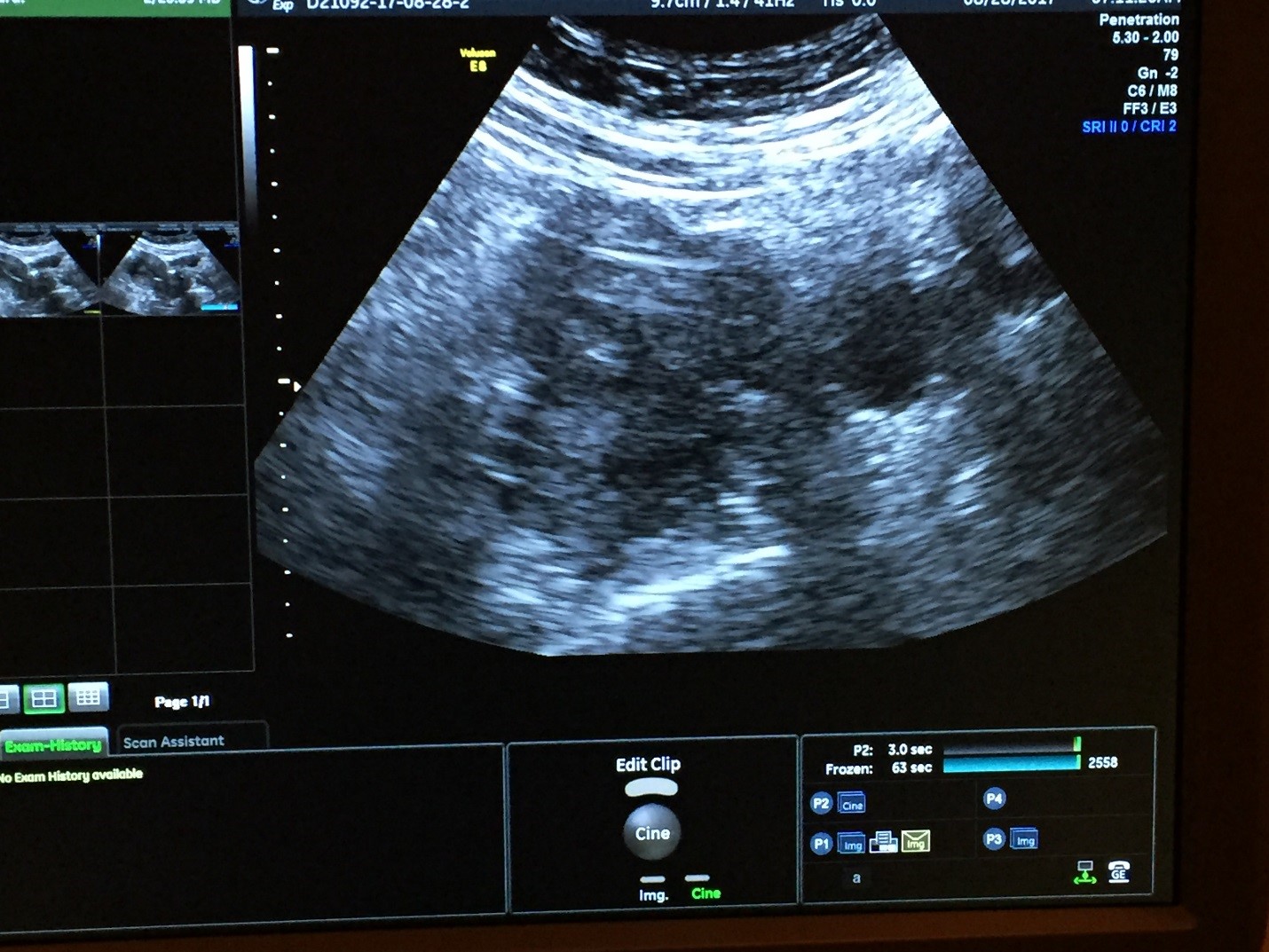
Once we got into the room, I was on a chair with my legs propped up (very similar to when you have your retrieval). The major difference is this time, you’re completely awake! Next, the x-ray tech came in and took some pictures of my cervix and uterus. Then Dr. Miller came in and was very jovial as usual! He said everything looked good, and proceeded to insert the catheter. This part made me feel a little crampy, but the feeling only lasted a minute so it wasn’t too bad – I would compare it to an intense pap. Then the embryologist brought our little embryo out in what looked like a really skinny straw. Dr. Miller inserted the skinny straw into the catheter, and voila, I’m pregnant (until proven otherwise)! Dan and I were able to watch everything on the x-ray screen. We couldn’t see the actual embryo since it’s microscopic, but we were able to see the air bubbles around it. It’s hard to tell in the picture below, but the embryo is the white speck in the middle of the picture. Dr. Miller reiterated that everything went as well as we could have asked for and wished us good luck!
The actual procedure only took 10 minutes and we were in the room for about 30 minutes. After I got dressed, the nurse gave us discharge instructions. I took today off from work, so I could rest and relax and will be working from home tomorrow. So far, I have stayed on the couch most of the day, but I did fold laundry and walk around a bit. I plan to take walks, but don't plan on going to the gym, because I can't have my heart rate over 140 or lift anything over 15 lbs. I was also instructed to stay on my medications until further notice. The nurse also said I might experience some bleeding. I did have some bleeding later in the morning (which is not something anyone wants to see if they are trying to get pregnant), but now, several hours later, it has mostly subsided.
Now we wait…and wait…and wait. I will take the pregnancy blood test 10 days from now. I’m excited, nervous and scared, but I think all those feelings are normal. I hope to update you all with good news in a few days. Wish us luck!
-Katie