
PCOS Treatment Guidelines: Lifestyle, Medications and Fertility Options
This blog is the second part of Dr. Laurence Jacobs’ series on Polycystic Ovary Syndrome (PCOS). In part one, he discussed the signs, symptoms and diagnostic criteria for PCOS.
In this follow-up, Dr. Jacobs outlines the latest PCOS treatment guidelines, from lifestyle modifications and metabolic therapies to fertility medications and assisted reproductive technology (ART). PCOS is a complicated disease, understand your treatment options based on your fertility goals.
About PCOS
As discussed in part I, Polycystic ovary syndrome (PCOS) is characterized by a combination of excess hair growth, ovulatory dysfunction, and polycystic ovarian morphology on vaginal ultrasound, associated with insulin resistance. Latest treatment guidelines focus on lifestyle modifications, medications, and careful fertility care, including the role of newer agents such as GLP-1 receptor agonists.
Lifestyle Modification for Preconception Health
Lifestyle intervention, overlooked by many physicians for decades, remains the cornerstone of PCOS management. Weight management, improved nutrition, and physical activity are consistently associated with improved metabolic health, ovulation, and higher pregnancy rates. Even modest weight loss of 5–10% can often restore ovulation and/or improve pregnancy rates naturally, as well as with medication/IUI and IVF treatments. Programs that offer qualified medical nutrition therapy (MNT), regular exercise training, and behavioral modification via personalized provider telehealth have excellent outcomes for preconception health (WINFertility and OvumHealth).
Medical/Surgical Therapies for Weight and Metabolic Management
Metformin continues to be used as first-line pharmacologic therapy for metabolic abnormalities, such as impaired glucose tolerance and insulin resistance in women with PCOS. The supplement Myo-Inositol has also demonstrated significant benefit in dealing with insulin resistance.
GLP-1 receptor agonists (tirzepatide, semaglutide and related agents) are a major addition in the treatment options for weight loss. These medications significantly reduce body weight, and insulin resistance in PCOS patients. Current evidence also suggests improvements in menstrual cycle regularity and ovulation. They can be helpful as an adjunct to lifestyle changes for overweight/obese women but are most effective when used in conjunction with lifestyle improvements. Careful collaborative decision making is vital, as side effects (nausea, vomiting, pancreatitis, gallbladder disease, etc.), high costs with little insurance coverage and long-term safety remain an issue. Since pregnancy safety studies are lacking, contraception should always be utilized when GLP-1s are used in women planning pregnancy in the future and stopped when attempting conception.
Bariatric surgery may be considered for women with PCOS and severe obesity who meet criteria for surgical weight management. While not specific to PCOS, weight reduction from bariatric surgery may restore ovulation and improve metabolic health.
Laparoscopic ovarian drilling, another surgical option, has a very limited role in modern infertility practices, but in the past has helped some women by reducing ovarian testosterone and other male hormones (androgens). This option is rarely used today due to costs and potential damage to ovaries leading to adhesions.
Ovulation Induction and Infertility Management
Infertility is very common in PCOS, primarily due to anovulation and/or poor egg quality.
Letrozole has become the first-line medication therapy for ovulation induction in women with PCOS and anovulation, among most Reproductive Endocrine/Infertility specialists and many Ob/Gyns. Many well-controlled randomized studies have demonstrated higher ovulation, pregnancy, and live birth rates, as well as lower multiple birth rates with letrozole compared with clomiphene citrate.
Clomiphene citrate (Clomid) remains a popular option, particularly among Ob/Gyns. Combination therapy with clomiphene plus Metformin improves ovulation and live birth rates compared to clomiphene alone.
Metformin when used alone is less effective for ovulation induction but may be considered in combination with Letrozole and/or Gonadotropin medications (Menopur, Gonal F and Follistim), when doing ovarian stimulation for ovulation induction or IVF.
Gonadotropins are second-line therapy when oral ovulation induction fails. Careful monitoring is required to minimize the risk of ovarian hyperstimulation (OHSS) and multiple pregnancies. IVF is far more effective and safer regarding multiples.
Assisted Reproductive Technology (ART) and IVF
In vitro fertilization (IVF) is often reserved for women who fail less invasive ovulation induction therapies or who have additional infertility factors such as tubal disease or male factor infertility. In PCOS, IVF requires particular caution due to the high risk of OHSS. The newest guidelines emphasize the use of GnRH antagonist protocols (Ganirelix; Cetrotide) and individualized low dose stimulation strategies with Lupron triggers to minimize this OHSS risk. Pre-treatment with metformin may also reduce OHSS risk in women still undergoing IVF with GnRH agonist protocols. As noted above, Preconception care—including optimization of weight, hormones and metabolic status—is recommended prior to doing ART.
A Comprehensive Approach to PCOS Treatment
PCOS is a complex condition requiring an individualized, comprehensive approach. Preconception health with lifestyle modification remains first-line therapy. Medication therapy has improved. Metformin and Myo-Inositol supplements maintain their roles. GLP-1 receptor agonists, with proper counseling and informed consent, represent a new option for weight loss and metabolic improvement.
For infertility treatments, letrozole is clearly the first-line option for ovulation induction. Clomiphene, metformin (alone), and gonadotropins are occasionally used. IVF is very effective but requires careful strategies to minimize OHSS risk. Single frozen embryo transfers greatly reduce the risk of multiples. (1-2% identical, if embryo splits).
Expert Care for PCOS
Dr. Jacobs has helped women manage their PCOS for more than 40 years and was formerly the Director of the PCOS Center of Excellence. He understands firsthand how medications, supplements and lifestyle modifications can profoundly impact the health and fertility of PCOS patients.
If you think you may have PCOS or are struggling with symptoms, Dr. Jacobs and our team can help with the correct diagnosis and treatment options. Click here to schedule a consultation.
To understand more about PCOS, read part one of this blog discussing symptoms and diagnosis.

PCOS Awareness Month: Signs, Diagnosis and Treatment Options
Polycystic Ovarian Syndrome (PCOS) is one of the most common hormonal conditions affecting 1 out of 10 women of reproductive age. Yet, it often goes undiagnosed because the signs and symptoms can be subtle and inconsistent. In this blog, Dr. Laurence Jacobs shares important information about how to know if you have PCOS and how different lifestyle and treatment approaches can improve your health.
Understanding PCOS
A common misconception is that all women with PCOS experience irregular periods, excess hair growth, ovarian cysts or weight gain. However, not every woman with PCOS has all of these symptoms. Because there is no single test to diagnose PCOS, some doctors may miss the correct diagnosis, especially in young women, by only treating irregular periods with birth control pills.
Signs and Symptoms of PCOS
PCOS may present differently from woman to woman, but symptoms often include:
- Irregular or absent periods
- Infrequent or absent ovulation
- Infertility
- Hirsutism (excessive hair growth) of face, chest or abdomen; acne
- Weight gain or obesity
- Insulin resistance
How is PCOS Diagnosed?
Women must have two out of three of the following diagnostic criteria:
- History of irregular or absent menstrual cycles and/or no ovulation since puberty
- Hirsutism and/or high blood levels of male hormones: Testosterone and Androgens
- Vaginal ultrasound evidence of polycystic ovaries (20 or more follicles in one or both ovaries)
It is also important to note:
-Other endocrine issues, such as various thyroid and adrenal diseases, must be ruled out as their symptoms can mimic signs of PCOS.
-Ultrasound diagnostic criteria no longer applies to teenage girls.
Key Considerations
- Not all PCOS patients are overweight (Classical PCOS). Some may have what is known as Lean PCOS.
- Women with PCOS often experience irregular periods and infertility due to lack of ovulation and/or egg quality.
- Insulin resistance is common in PCOS patients. This means their bodies do not respond to glucose properly. In order to maintain normal blood glucose levels, the pancreas produces excessive insulin, which then increases fat storage and disrupts hormone levels. This leads to symptoms such as irregular periods, obesity, infertility and excess hair growth.
Lifestyle and Treatment Approaches
The good news is that addressing insulin resistance can help restore normal ovarian function. Research shows that lifestyle and medical strategies can improve fertility and overall health in women with PCOS:
- Nutrition: A balanced, lower-carb diet can help regulate blood sugar and hormone levels.
- Exercise: Regular activity supports insulin sensitivity and weight management.
- Supplements: Vitamins like Inositol may help regulate insulin resistance and menstrual cycles.
- Medications: Insulin-sensitizing medications such as Metformin are often used to improve ovulation and restore hormone balance. The beneficial use of GLP-1 agonist medications, such as Semaglutide (Ozempic or Wegovy) and Tirzepatide (Zepbound) along with proper nutrition and lifestyle changes will be discussed in part 2 of this PCOS blog.
- Weight reduction: Even a weight loss of 5–10% can enhance fertility, improve natural ovulation and increase success rates with fertility treatments, including IVF.
Expert Care for PCOS
Dr. Jacobs has helped women manage their PCOS for more than 40 years and was formerly the Director of the PCOS Center of Excellence. He understands firsthand how medications, supplements and lifestyle modifications can profoundly impact the health and fertility of PCOS patients.
If you think you may have PCOS or are struggling with symptoms, Dr. Jacobs and our team can help with the correct diagnosis and treatment options. Click here to schedule a consultation.
Stay tuned for part two of this PCOS blog which will discuss management and treatment options for those PCOS patients dealing with infertility issues.
The Importance of Single Embryo Transfer in Modern IVF
Dr. Charles E. Miller has practiced fertility medicine for more than 35 years, witnessing firsthand how technology and standards of care have evolved. One of the most significant shifts in modern IVF is the move toward Single Embryo Transfer (SET) as the recommended best practice. In this blog, Dr. Miller explains the change and how it benefits patients today.
Background
When Dr. Miller first opened his IVF clinic in Naperville, Illinois in September 2001, the common practice was to transfer multiple embryos at one time. Two embryos would typically be transferred in hopes of increasing the chances of a successful pregnancy. Dr. Miller’s practice was successful, and the clinic soon earned the reputation of the “Twin Capital.” Because this was the standard at the time, patients going through treatment accepted it and sometimes even favored the practice, “embracing the idea of being ‘one and done’ in terms of family building” as put by Dr. Miller. However, sometimes multiple embryo transfers came with complications, or resulted in triplet pregnancies.
Hidden risks with multiple embryos transfers
In addition to the occasional triplet pregnancy, Dr. Miller noted that once per quarter, his patients would deliver prematurely. Most of the twin pregnancies would be delivered nearly at full term (36-38 weeks) but premature deliveries were usually due to cervical incompetence, where the cervix dilates too early. According to Dr. Miller, “the risk of delivery prior to 32 weeks was 2% for singleton pregnancies, 8% for twins, and 26% for triplets (i).” Even with healthy pregnancies and births, children were left with long-term health impacts like cerebral palsy, profound developmental delays, and severe sensory and motor disabilities. Other risks associated with multiples include:
- Preterm birth
- Low birth weight
- Higher rates of Neonatal Intensive Care Unit (NICU) admission
- Maternal complications
How technology changed the game
Thanks to advancements in the embryology lab, including cryopreservation techniques and having the ability to select a genetically normal embryo, via Preimplantation Genetic Testing for Aneuploidy (PGT-A), SET is the optimal method of transfer. Dr. Miller no longer performs two-embryo transfers, only SET, and has delivery rates of over 65%.
Why is SET the recommended approach?
The values of SET extend beyond its clinical outcomes. Not only is it more cost-effective with saved NICU visits, but it also reduces the emotional strain that can come with a high-risk pregnancy. Elevated stress from pregnancy with multiples is well documented, Dr. Miller citing a study in which “22% of mothers of multiples had Parenting Stress Index scores in the severe range, compared to 5% of mothers with singleton pregnancies conceived via IVF and 9% with singleton pregnancies conceived naturally (ii).” By shifting to SET, clinics and patients can experience reduced risks from multiple pregnancies and reach their family building goals more safely.
i Practice Committee of American Society for Reproductive Medicine. Multiple gestation associated with infertility therapy: an American Society for Reproductive Medicine Practice Committee opinion. Fertil Steril. 2012 Apr;97(4):825-34.
ii. Glazebrook C, et al. Parenting stress in first-time mothers of twins and triplets conceived after in vitro fertilization. Fertil Steril. 2004 Mar;81(3):505-11.
What to Expect at Your First Fertility Consultation with Dr. Jacobs
Starting your fertility journey can feel scary and intimidating, yet also hopeful. Knowing what to expect can help ease anxiety and make you feel more comfortable before beginning this process.
With more than 45 years of experience, Dr. Laurence Jacobs has guided thousands of families through their fertility consultations. Here’s what to expect when you schedule yours:
First Steps:
You and your partner (if applicable) should plan to attend the first consultation together; it usually lasts about an hour.
What We’ll Review:
- Medical records and history, menstrual cycle, past surgeries or complications
- Lifestyle factors and any medical issues (for you or your partner)
After that, we’ll outline the infertility workup to determine why pregnancy isn’t happening. This includes:
- Hormone blood tests
- Diagnostic ultrasounds
- X-rays
- Semen analysis
5 Key Fertility Factors We Evaluate (you may have more than one)
1. Male Factor
- Semen analysis
- Sperm function test, including strict morphology, to identify if there is any difficulty in being able to fertilize an egg
2️. Ovarian Reserve (Egg Supply)
- On cycle days 2-4, you will come into the office so we can check your hormone levels, including AMH, which helps assess your egg supply.
- We’ll also do an antral follicle count transvaginal ultrasound to measure how many egg sacs (follicles) are present. The sonographer will count the antral follicles on both ovaries, looking for them to be 2-10 mm in diameter. The more follicles the better!
3️. Ovulation Evaluation
- Ovulation predictor kits, which look for a rise in a hormone called LH that tells us when you’re about to ovulate
- Ultrasound to check egg sac (follicle) size
- Follow-up progesterone test about a week later to confirm ovulation and assess if you have produced enough progesterone to be able to build up the lining of the uterus to get it ready for a pregnancy
4️. Uterine and Tubal Factors
- HSG, an X-ray using contrast dye, to view the uterus and fallopian tubes or a saline sonogram to check for fibroids, adhesions or polyps
- We also flush the fallopian tubes (part of the HSG) to make sure the fluid goes through the tubes so we know if the tubes look healthy and are functioning properly.
5. Pelvic Factors
- Check for adhesions from endometriosis, pelvic inflammatory disease or past surgeries
- Assessment for fibroids that could impact fertility
Next Steps:
After your workup (typically completed in a few weeks), we’ll schedule a follow-up appointment to review results, discuss medications and consider options like IUI or IVF if necessary. We’ll also recommend lifestyle changes to help support your fertility.
Ready to schedule?
Call us at 630-428-2229 or fill out this request form to get started.
About Dr. Laurence Jacobs
Dr. Laurence Jacobs is a Mayo Clinic fellowship-trained Reproductive Endocrinologist with over 45 years of experience helping thousands of families build their dreams through personalized fertility care.
Board-certified in Obstetrics and Gynecology, Dr. Jacobs brings deep expertise in IVF, PCOS, male and female infertility and second opinions for complex cases. After decades in leadership and practice, he is proud to provide consultations at Charles E. Miller, MD & Associates | CCRM Fertility’s Naperville office. Known for his compassionate approach and trusted by both patients and peers, Dr. Jacobs has been recognized nationally as a Top Infertility Doctor and consistently honored for his patient-centered care.
Welcome Dr. Laurence A. Jacobs
Dr. Laurence A. Jacobs is a Mayo Clinic fellowship-trained Reproductive Endocrinologist and Infertility Specialist (REI) in clinical practice in the Chicago area for over 45 years. With a commitment to providing compassionate, personalized care, Dr. Jacobs has helped thousands of infertile couples and individuals build their families through holistic and advanced fertility treatments. At CCRM Naperville/Charles E. Miller, MD & Associates, Dr. Jacobs performs new and existing Patient Consultations for general female infertility, male infertility, PCOS and IVF.
Dr. Jacobs earned his medical degree (M.D.) from Northwestern University where he later completed his 4-year residency in Obstetrics and Gynecology. Dr. Jacobs is board certified in OB/Gyn and practiced as a general OB/Gyn for 7 years. Then he further specialized in Reproductive Endocrinology and Infertility (REI), successfully completing his fellowship training at the prestigious Mayo Clinic. Over the course of his distinguished career, Dr. Jacobs has held academic and clinical leadership roles, authored many peer-reviewed publications, and presented at national conferences on infertility treatment innovations.
After completing his REI Fellowship at the Mayo Clinic, Dr. Jacobs initially joined Dr. Charles E. Miller as a Partner, practicing Infertility and IVF for 7 years together until 1995. Subsequently, he became a Partner at Fertility Centers of IL for well over 20 years until his mandatory retirement. He has now re-joined his friend and colleague, Dr. Charles E. Miller, bringing his wealth of knowledge and clinical ability to CCRM- Naperville. Dr. Jacobs is honored to be a part of the highly acclaimed CCRM (Colorado Center for Reproductive Medicine) network. For many decades, CCRM, a leader in exceptional cutting-edge fertility care, genetics and research, has continuously produced some of the highest IVF live birth rates in the U.S.
Nationally recognized for his patient-centered approach, Dr. Jacobs focuses on understanding each patient’s unique fertility challenges. His deep expertise in diagnostics, IVF and personalized care plans makes him highly sought-after for New Patient Consultations. He is particularly passionate about helping patients with unexplained infertility, ovulation disorders, recurrent pregnancy loss, PCOS, elective Egg vitrification (Cryopreservation), and does comprehensive consultations for those seeking second opinions, especially for failed IVF.
“As your doctor, I am committed to compassionate and respectful care. The measure of an excellent ‘fertility specialist’ should not be based solely on pregnancy rates, but also on how patients feel about the care they receive. Most of my patients are referred to me by ‘word of mouth’ from physicians and patients, as well as internet reviews. I get tremendous satisfaction from what I do, and what I do every day makes a difference in people's lives. I take that responsibility very seriously.”
AWARDS & HONORS
Dr. Jacobs has received many awards for his contributions to reproductive medicine. He has been repeatedly honored by distinguished recognition as a Top Infertility Doctor by Castle Connolly publications, AMERICA’S TOP DOCTORS (top 1% of Infertility MDs Nationwide) for over 20 consecutive years. CHICAGO Magazine has repeatedly selected Dr. Jacobs as a ‘Top Doctor Chicago Area’ for Infertility. He is a Five-Star Physician on Healthgrades. Dr. Jacobs is well-known for his kindness, empathy, quick wit, and sense of humor which puts his patients at ease. He “listens and spends time” and accordingly has often been honored with Vitals.com’s Compassionate Doctor Award, recognizing exceptional care and grace based on patient reviews.
He is also actively involved in professional organizations such as the American Society for Reproductive Medicine (ASRM) and is a Fellow, American College Obstetrics & Gynecology.
When not practicing medicine, Dr. Jacobs enjoys spending time with his wife, Diana, doing boating, gardening, Netflix, and riding their Vespas together in the countryside. They also love traveling and visiting their adult children and grandchildren.
Patient Story- SJ
SJ has been a patient of ours since 2012. After years of trying at another clinic, she underwent surgery with Dr. Miller, and then made the difficult decision to use donor eggs. In 2013, SJ and her husband welcomed twins! However, their family was not complete, and they welcomed another son last year! SJ understands the complexities of using donor eggs but hopes her journey brings awareness and inspiration to others in similar situations.
If you would like to learn more about our donor egg program, please contact Lindsey Bartscher (lbartscher at drcharlesmiller.com). Special thanks to SJ and her husband for sharing their inspiring story.
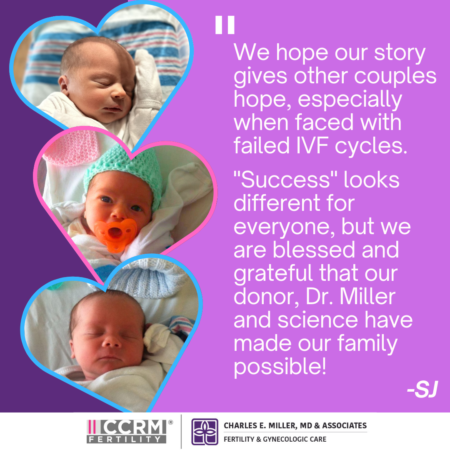
Our journey to build our family was a long one, but we are happy to say we are on the "other side" of infertility thanks to Dr. Miller and his wonderful staff!
We started trying to conceive in May 2009 when I was 29 years old. Both of our parents had conceived easily, and we were both healthy, so we didn't expect to have any problems. Unfortunately, after a year of negative cycles, we started seeing a fertility doctor in June 2010. Despite all our tests looking normal, we did four IUIs that all failed. When we finally got to the point of doing IVF, we just expected it would work. Our first IVF cycle, I got pregnant and for the first time ever saw two pink lines! Even though my hcg numbers were low, I thought just the fact that I'd finally seen a positive pregnancy test meant things might work out. We lost the pregnancy around 5.5 weeks and quickly moved into a frozen embryo transfer (FET). That cycle failed, and we did two more IVF retrieval cycles and fresh transfers that both failed. After our third failed IVF cycle, my original fertility doctor suggested that we may need to use donor eggs. I was not ready to move forward with donor eggs then, so we tried one more IVF cycle with our original doctor. When that cycle failed, our doctor suggested not only donor eggs but donor sperm. We asked our doctor if he would be willing to perform further testing and a laparoscopy to test for endometriosis, since my sister had recently been diagnosed with it. When he refused, we decided it was time to switch clinics.
I had a friend who was able to get pregnant after a procedure Dr. Miller performed, so based on her recommendation and a lot of research, we decided Dr. Miller's office was the right place for us to continue our journey. Dr. Miller was completely on the same page as us and understood that before we did donor eggs or donor sperm or another IVF, we wanted to be 100% sure we had tested for any potential issues like endometriosis or immune issues that could affect implantation of an embryo. Our motto was "no regrets," so we wanted to make sure we had no regrets about our decisions on this fertility journey. Dr. Miller performed a laparoscopy after finding mild endometriosis, and he discovered I had homozygous MTHFR, both issues he thought could affect IVF success. We tried one more IUI cycle and one IVF cycle with Dr. Miller. After our first IVF cycle with Dr. Miller, he told me I had "soft" eggs and recommended donor eggs. He said he did not think we needed donor sperm, but he showed us the statistics on donor eggs and explained how such a cycle would work. Dr. Miller's Donor Egg IVF Coordinator also gave us a lot of information on donor egg agencies and counselors.
After taking a few months to regroup and make sure we were ready, we decided to move forward with donor eggs in August 2012. Dr. Miller also added Lovenox and Medrol to my cycle due to my MTHFR and repeated IVF failures. We found an amazing donor egg agency (Graceful Conceptions) and moved forward with a fresh donor egg cycle in December 2012. The difference between our donor egg cycle and my egg cycles was night and day! We had so many more embryos to work with that we did with my cycles, and they were all top quality! We transferred two embryos on December 18th and were able to freeze five more high graded embryos. And right before Christmas I got two beautiful pink lines on a pregnancy test! It was the BEST Christmas gift we could ever imagine! We found out two weeks later that we were expecting not only one but TWO babies!
Our twins were born healthy in 2013, and we kept our frozen embryos for several years. Eventually, in 2022, we decided to try and expand our family. We knew it might take a few tries, but we got lucky and had success on our second frozen embryo transfer in May 2022.
We know some people are not comfortable with donor eggs, but Dr. Miller made us feel so comfortable about it, and he reminded me that with donor eggs I would still be carrying my children. We know our three beautiful children would never have been possible without donor eggs or Dr. Miller. We are forever grateful we decided to switch clinics back in 2012, and we are thankful Dr. Miller was so straightforward about donor eggs being our best chance of having a baby and building our family. We explained to our kids that donor eggs are just part of their story and something that makes them special, and they will always know how much they were wanted and loved! We hope our story gives other couples hope, especially when faced with failed IVF cycles. "Success" looks different for everyone, but we are blessed and grateful that our donor, Dr. Miller and science have made our family possible!
-SJ
Ovarian Pexy- A Simple Procedure to Help Improve Egg Retrieval Outcomes
We posted a video of Dr. Miller discussing a recent surgical procedure he performed called an Ovarian Pexy that helps improve egg retrieval outcomes. We figured this was a procedure many were unfamiliar with, so we asked Dr. Miller for more information. Get ready to understand how this simple procedure can make a big difference on your road to becoming a parent.
Q: What is an Ovarian Pexy?
Dr. Miller: A laparoscopic procedure to move the ovaries closer into the pelvis so that the follicles can be more easily identifiable.
Q: How do you know if you are a good candidate for Ovarian Pexy?
Dr. Miller: The procedure would be performed on someone whose ovaries are out of position. A woman can be born with her ovaries misplaced, making IVF difficult. Additionally, another potential cause is adhesive disease – whether from infection, endometriosis or prior surgery, the ovaries are simply pulled away from the pelvis.
However, keep in mind that you don’t know whether or not there is room for improvement until you look at the anatomy. If I cannot see the ovary, I will not take the patient to stimulation. Generally, we have indications that the ovary is not in the right place and see this while the patient is undergoing transvaginal ultrasound or when I perform a saline infused sonogram. At that point, I recommend surgery. Pexy of the ovaries is ultimately a game time decision at the time of surgery, when the anatomy can be seen.
Q: Why does this procedure improve your chances for a more successful egg retrieval?
Dr. Miller: It gets the ovaries to a place where they can be easily visualized via ultrasound and thus, makes egg retrieval easier.
Q: What is the recovery time and how soon can you do an egg retrieval after the procedure?
Dr. Miller: The recovery time is 5-7 days at home and the patient can start preparing for an egg retrieval with her next cycle.
Q: How common is an Ovarian Pexy?
Dr. Miller: Since most reproductive endocrinologists do not perform surgery, this procedure is not routinely performed. Instead, patients settle for a lesser amount of eggs. Oftentimes, Dr. Miller sees patients who have gone through cycles with other physicians and have not had eggs retrieved on one side because of the ovary position. After the ovarian pexy procedure, patients can go from not being able to retrieve eggs to having a comparable number of eggs retrieved from either ovary.
Interested in scheduling a consultation with Dr. Miller? Call 630-428-2229 to set up an appointment or request a consultation online.
The Advanced IVF Institute Joins the CCRM Fertility Network of Clinics
Big news for our practice- the best just got better! We are pleased to announce we are now a part of the CCRM Fertility network of clinics. CCRM Fertility is a global pioneer in fertility treatment, research and science and specializes in the most advanced fertility treatments, with deep expertise in IVF, fertility testing, egg freezing, preimplantation genetic testing, third party reproduction and egg donation, achieving some of the highest Iive birth success rates in the U.S.
Dr. Miller and our dedicated and innovative team can’t wait to join forces with CCRM Fertility to provide exceptional care to our patients and give them the best opportunity for success.
Rest assured, Dr. Miller will remain as Practice Director and you will continue to receive the outstanding and personalized care you expect of us; however, now your access to top-tier medical resources has expanded to become even more innovative, efficient and accessible.
Dr. Miller had this to say: “It is an honor to join the prestigious CCRM Fertility network. Together, we are committed to our patients through innovative thought, procedures and technologies. I look forward to caring for existing patients and welcoming new patients through our doors as they face fertility and gynecologic challenges.”
We are excited to join with CCRM Fertility to bring joy to even more families! Check out the official press release below.
CCRM Fertility Broadens North American Footprint By Adding The Advanced IVF Institute to its Network
CHICAGO, Aug. 2, 2023 /PRNewswire/ -- CCRM Fertility, a global pioneer in fertility treatment, research and science, has added The Advanced IVF Institute, to its rapidly expanding fertility treatment and family-building network. Dr. Charles Miller leads two Chicago-area locations and provides cutting-edge fertility treatments, including in vitro fertilization (IVF), fertility preservation and reproductive surgery.
For more than 35 years, CCRM Fertility has helped transform lives through exceptional fertility care. CCRM Fertility's diverse, highly regarded team of physicians, research scientists, embryologists and professional staff are dedicated to helping patients achieve their dream of having a baby today, or in the future, achieving some of the highest Iive-birth success rates in the U.S. CCRM Fertility's expansive network currently serves 16 major metropolitan areas with 37 locations across the U.S. and Canada. Now, Chicagoans can have the benefit of the CCRM expertise in their own backyard.
"We are excited to welcome Dr. Miller and his team to our network, as they spearhead one of Chicago's leading IVF and surgery clinics and are recognized nationally and globally," said CCRM Fertility CEO Bob LaGalia. "Dr. Miller is an innovator in reproductive surgery and has a passion for learning new procedures, techniques and instrumentation that can positively impact patient outcomes. Dr. Miller and his experienced team will be an invaluable asset to CCRM as we collaborate to make assisted reproductive technologies more efficient and accessible for our patients."
As an internationally renowned expert in minimally invasive gynecologic surgery and in the treatment of infertility, Dr. Miller founded The Advanced IVF Institute in 2008. He is a graduate of the Honors Program in Medical Education from Northwestern University and completed his residency in obstetrics and gynecology at the University of Texas Southwestern Medical School, Parkland Memorial Hospital. Dr. Miller then earned his fellowship in reproductive endocrinology and infertility at the Hospital of the University of Pennsylvania.
Dr. Miller is a past president (2008) of the AAGL (formerly the American Association of Gynecologic Laparoscopists), the largest association of laparoscopic and hysteroscopic surgeons dedicated to the research and advancement of minimally invasive gynecologic procedures. Dr. Miller is also a past president (2011-2013) of the ISGE (International Society for Gynecologic Endoscopy).
In 2022, Dr. Miller received the AAGL esteemed distinction of Honorary Chair for his exemplary service to the AAGL and the outstanding contributions he has made in the field of reproductive medicine and minimally invasive gynecologic surgery.
Dr. Miller is the Director of Minimally Invasive Gynecologic Surgery and since 2010, Director of the Fellowship in Minimally Invasive Gynecologic Surgery Program at Advocate Lutheran General Hospital. He is the current president of the Foundation of the AAGL. He is also a faculty member of the Clinical Fellowship in Reproductive Medicine and Immunology, Rosalind Franklin University of Medicine and Science. Dr. Miller's ongoing dedication to developing young minimally invasive gynecologic surgeons earned him the AAGL's honorable John F. Steege, MD, Mentorship Award in 2018.
"It is an honor to join the prestigious CCRM Fertility network. Together, we are committed to our patients through innovative thought, procedures, and technologies," said Dr. Miller, who will continue to serve as Practice Director. "I look forward to caring for existing patients and welcoming new patients through our doors as they face fertility and gynecologic challenges."
About CCRM Fertility
CCRM Fertility is a global pioneer in fertility treatment, research and science. Founded by Dr. William Schoolcraft more than 35 years ago, CCRM Fertility specializes in the most advanced fertility treatments, with deep expertise in IVF, fertility testing, egg freezing, preimplantation genetic testing, third party reproduction and egg donation. CCRM Fertility leverages its own data and a dedicated team of in-house reproductive endocrinologists, embryologists and geneticists to deliver industry-leading outcomes. CCRM Fertility is a proud strategic partner of Unified Women's Healthcare, which is accelerating meaningful change in women's healthcare by building healthy, innovative and mission-driven businesses to meet the comprehensive needs of women across the entirety of their health journey. For more information, visit www.ccrmivf.com.

Helping Women Navigate through Infertility and Reproductive Health Challenges
I’m excited to be writing the first post for our new blog! I say this all the time, but back in the day, when Michael Jordan and Oprah were in Chicago, I used to say I had the third best job in the city. With their absence, I guess I have the best! As a successful reproductive endocrinologist and minimally invasive gynecologic surgeon, I am fortunate enough to lecture around the world, conduct research and contribute scholarly articles to scientific journals and textbooks. However, what really motivates me is the opportunity to take care of you and help you achieve your health goals, and for many of you, help grow your family tree. That’s why this blog is for you.
I want this blog to be a resource for those seeking information about infertility treatment or gynecologic care. We will be discussing the latest in women’s health topics and sharing relevant information, research and news stories. I am so intrigued by all the medical and surgical advances we have seen since I was a medical student and look forward to sharing my thoughts as they continue to develop and expand. Not only will you hear insights from me, but also Dr. Cholkeri-Singh, Dr. Sasaki and other staff members.
I also hope to use this blog as a dialogue for my patients and anyone else who is looking for support with infertility or gynecologic care. I will write about topics you will hopefully find inspiring, offering you the strength and courage to continue to face treatments or surgery head on.
One of the best parts of being a physician is getting to know my patients and helping them resolve issues – whether it’s the resolution of pain and bleeding or finding just the right treatment plan to help a couple achieve pregnancy and fulfill their dreams of starting a family.
You’ll also hear from patients who will share their stories and journeys in hopes to show you that you are not alone in your struggle. It is a process – a very personal one, that can be long and with ups and downs -- and we are with you all the way through it.
My incredible staff will be highlighted in this blog. They are truly amazing and the backbone of my practice. Each month a staff member will be featured so you can get to know them better.
Lastly, I want to hear from you. Do you have questions about infertility, uterine fibroid treatment or endometriosis? Do you have a success story you would like to share that might give others hope? Drop us a line in the comments below or contact us through our website and be sure to follow our Facebook page.
To your health,
Dr. Miller
